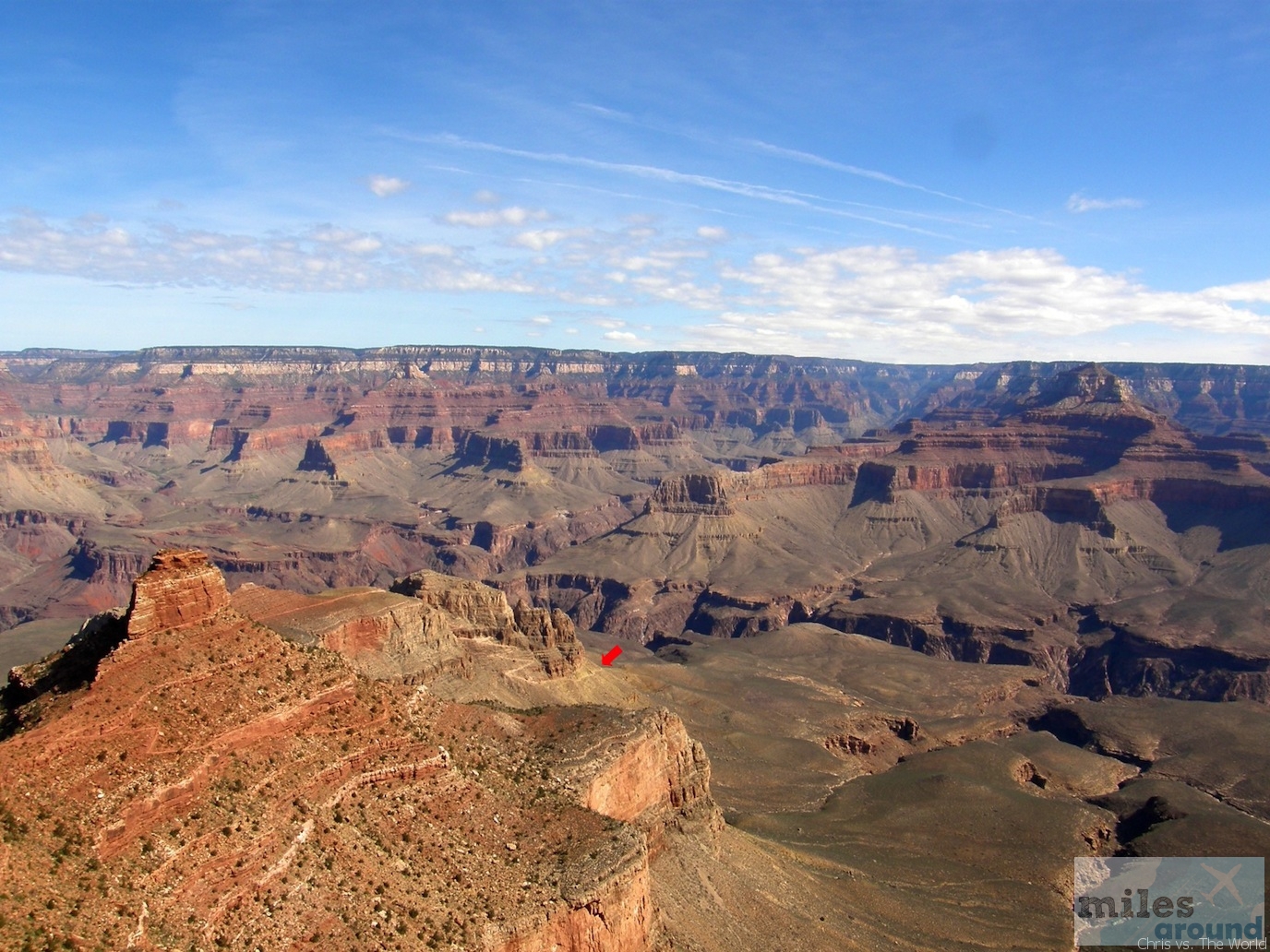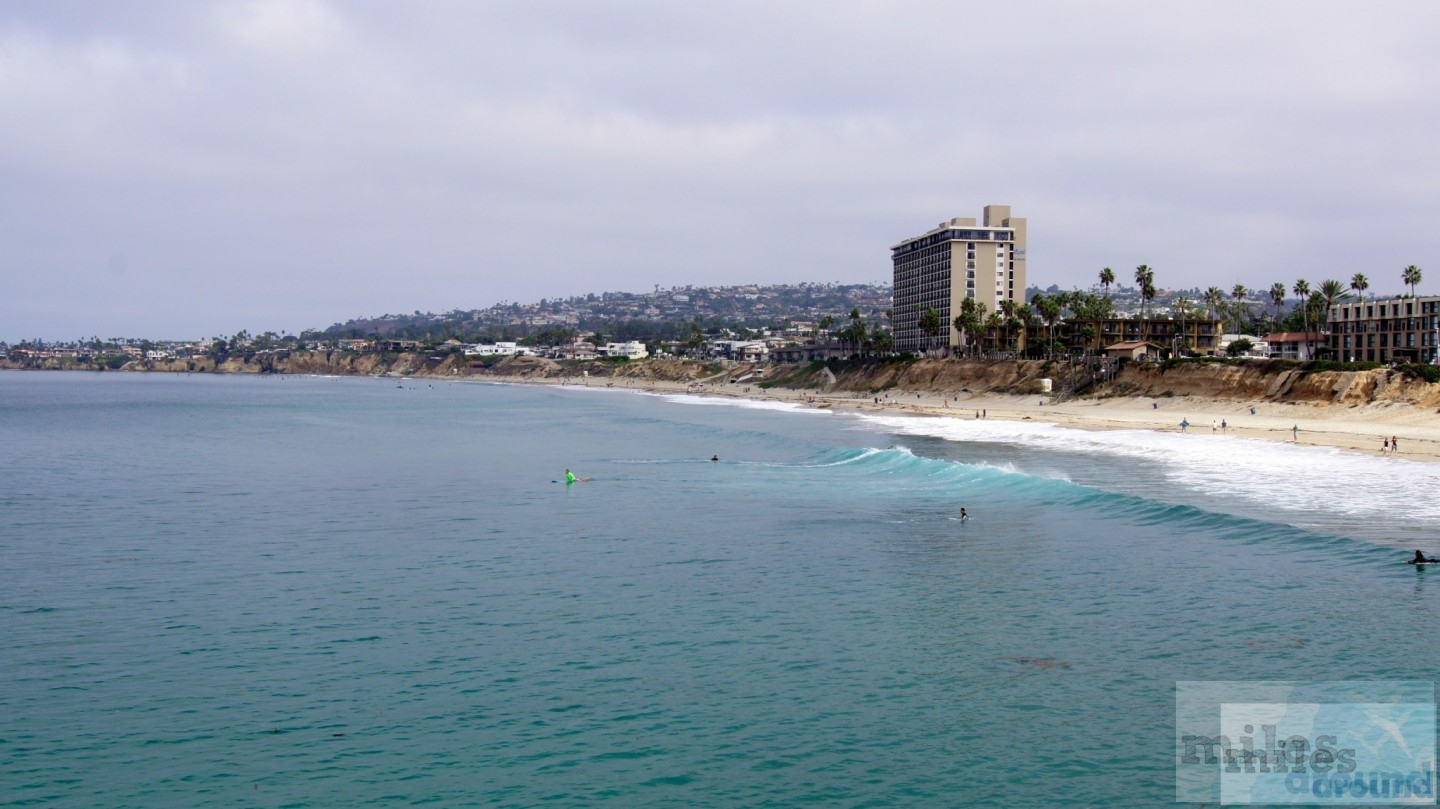
Today's plan was to hike the Kaibab Trail in the Grand Canyon. We spent the night in the small town of Williams, right off Interstate 40. From here, it's about 60 miles to the Grand Canyon Visitor Center.
The drive takes about an hour and offers a first glimpse of the Grand Canyon's landscape. The vegetation changes constantly with increasing altitude. Since the canyon rim lies at 2,213 meters, it's no surprise that everything from lush forests to sparse scrubland is present. Interestingly, the Grand Canyon area doesn't follow the vegetation zones familiar from Europe. The densest forest is found just before the canyon rim at about 2,100 meters, an altitude at which the tree line in the Alps is already well above the rim.
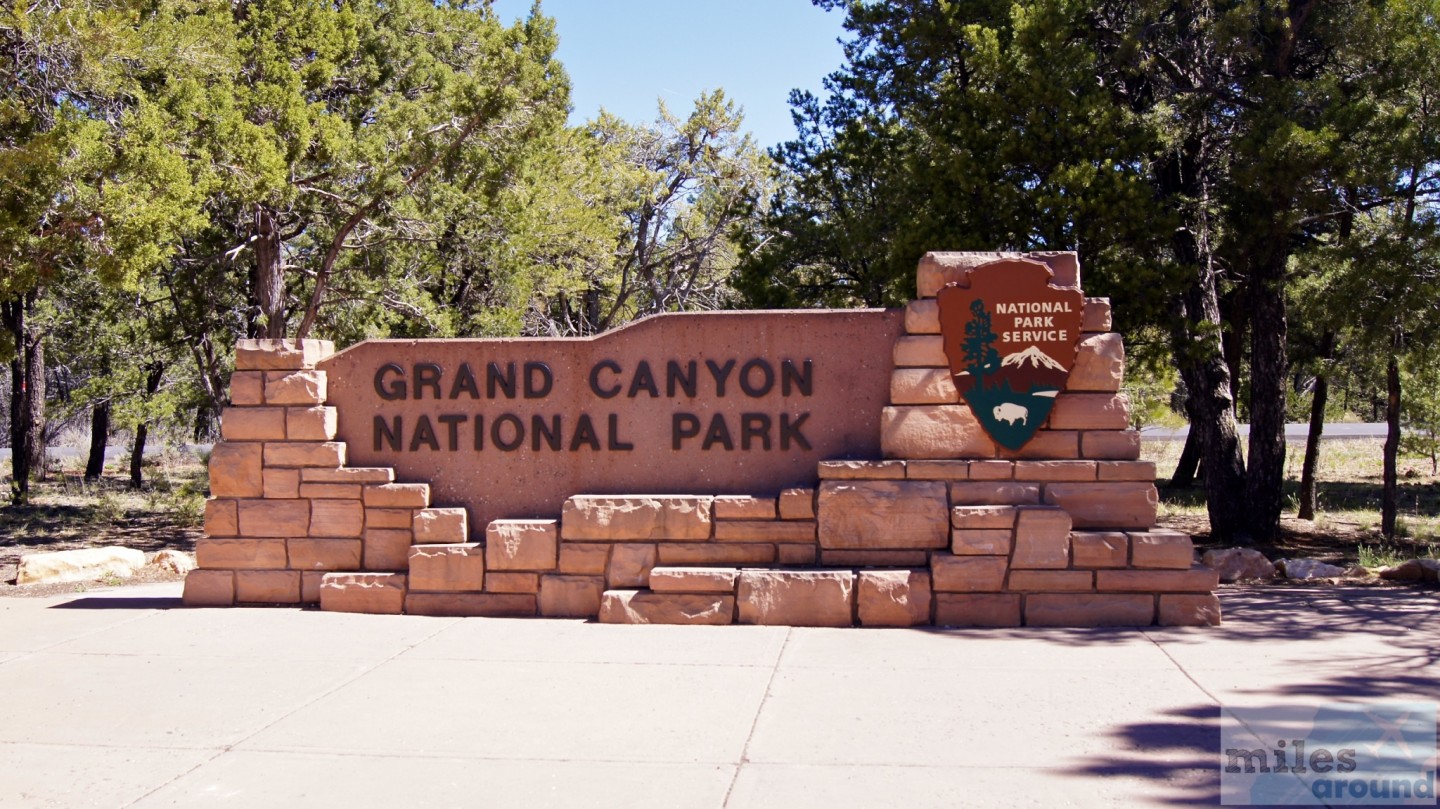
Just before reaching the canyon rim, you enter Grand Canyon National Park. A ticket costs $25 per vehicle and is valid for seven days. This grants access to various information centers about the canyon's formation and natural features, as well as free use of the shuttle bus, which runs on several routes to the viewpoints along the canyon rim.
Grand Canyon Hike: Kaibab Trail
We took the orange trail to the South Kaibab Trailhead. From there, our hike into the canyon began. This is the last opportunity to refill your water bottles, which is highly recommended. Since we didn't know how far we wanted to go into the canyon, we filled our bottles to the brim and set off with 3 liters of water per person, along with various granola bars and chocolate chip cookies.
Kaibab Trail: OOH-AAH-Point
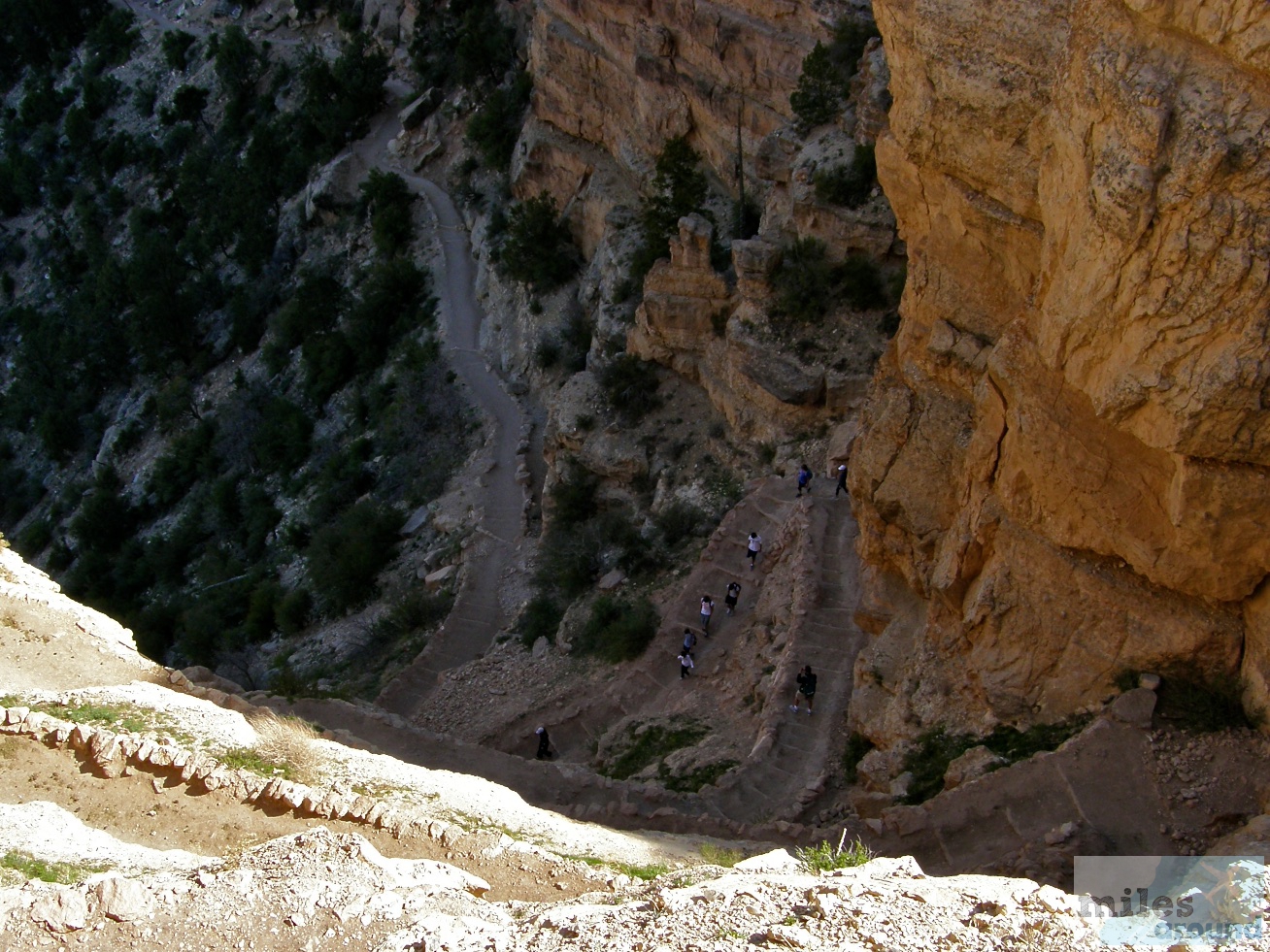
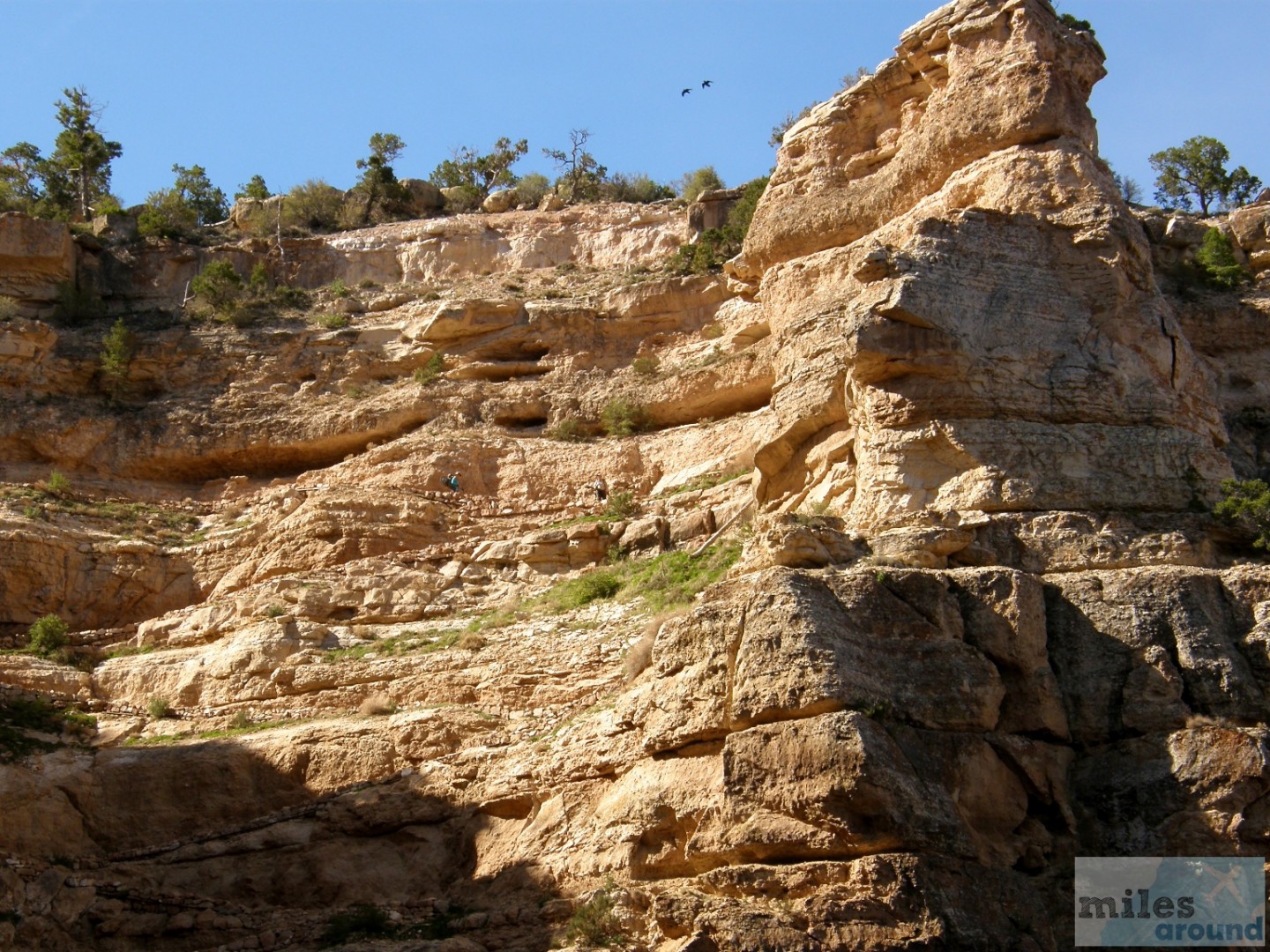
Right from the start, the trail descends steeply via several switchbacks, and after just half an hour you've already descended the first 200 meters. Then you reach the OOH-AAH point.
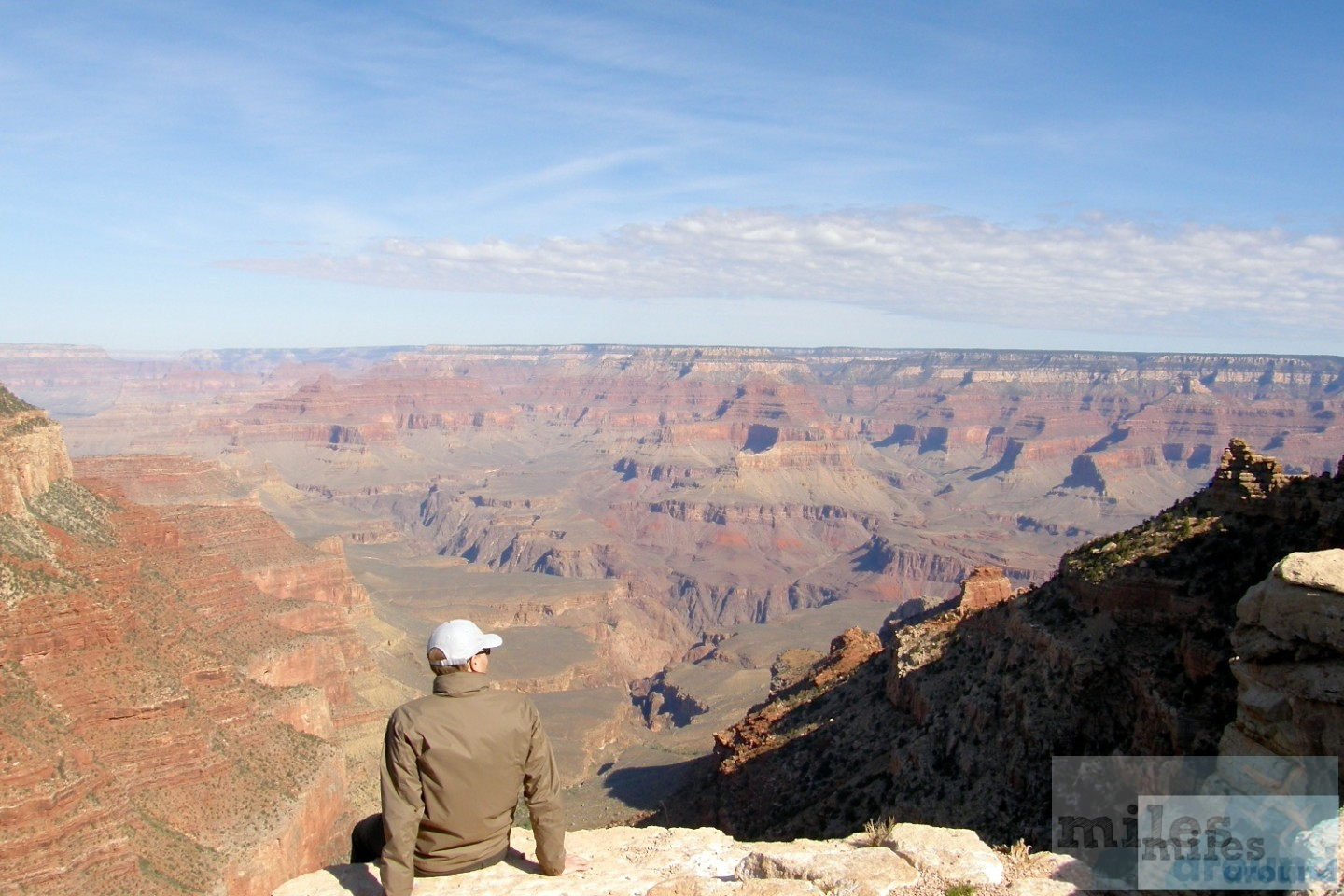
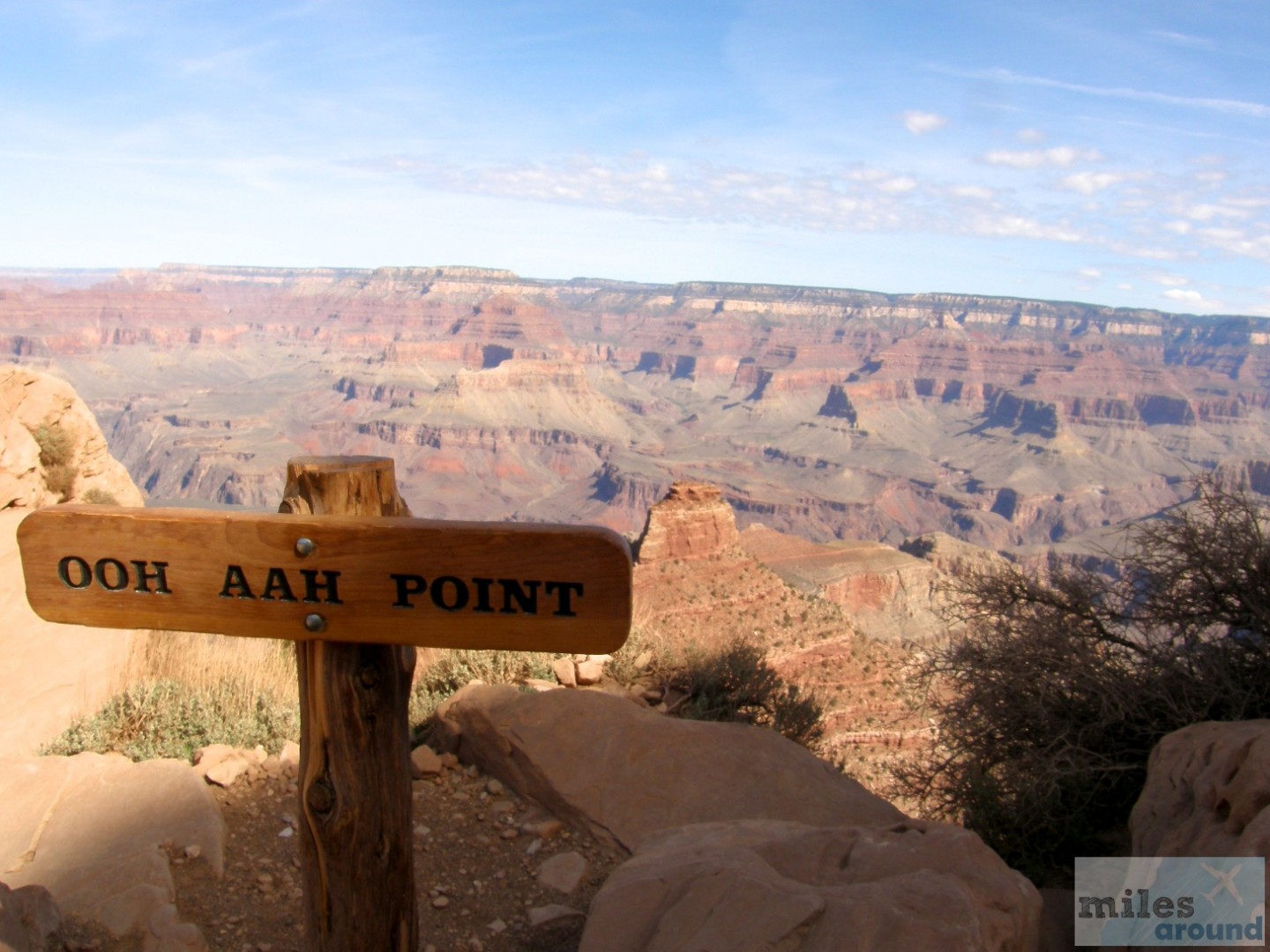
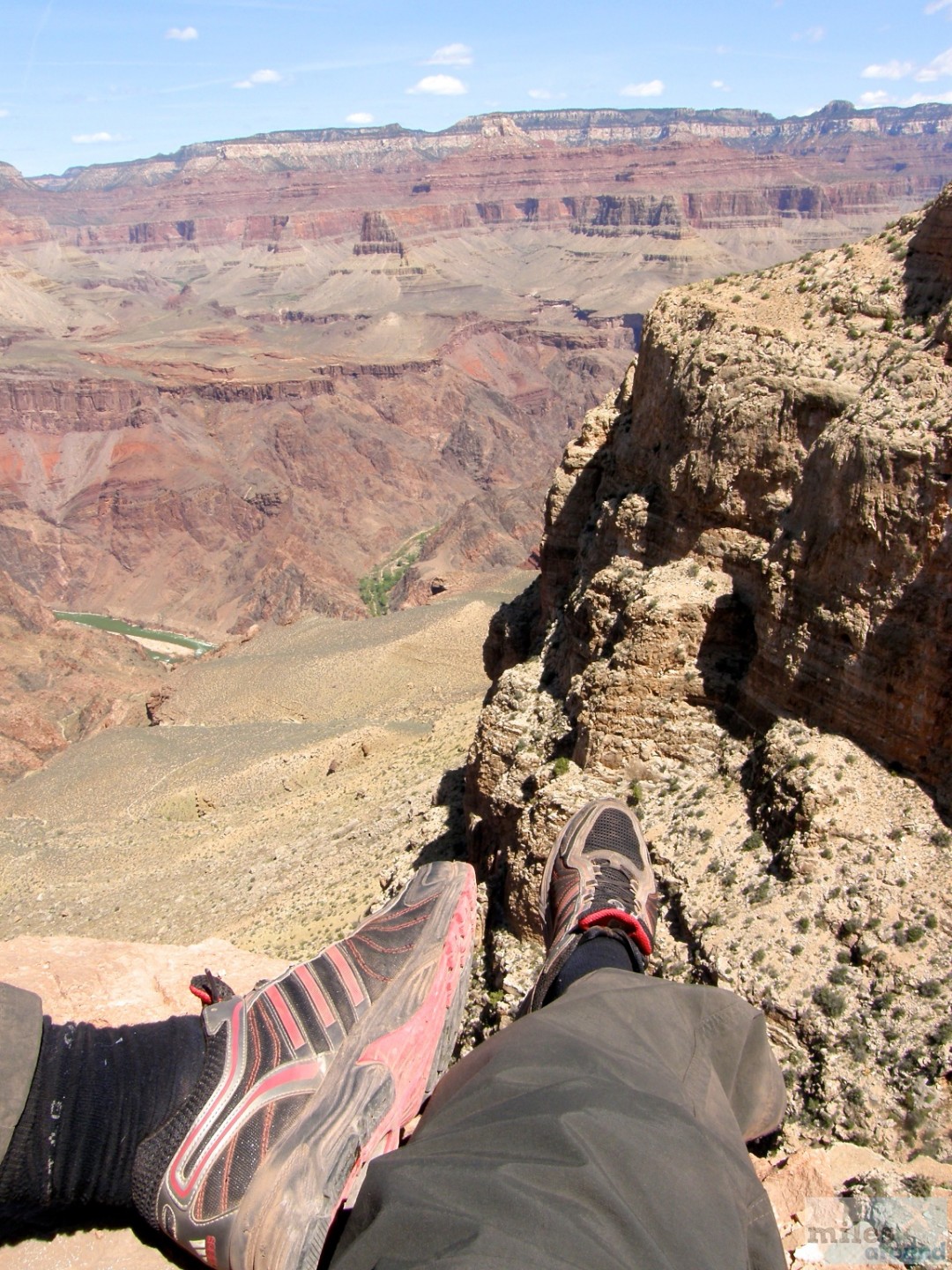
This viewpoint undoubtedly owes its name to the magnificent view over a large section of the canyon landscape and the accompanying exclamations of delight from visitors. Thanks to the excellent visibility, we could easily see to the other side of the canyon (approximately 13 kilometers) as well as the inner plateau. The individual rock strata were clearly visible from this vantage point.
Kaibab Trail: Cedar Ridge
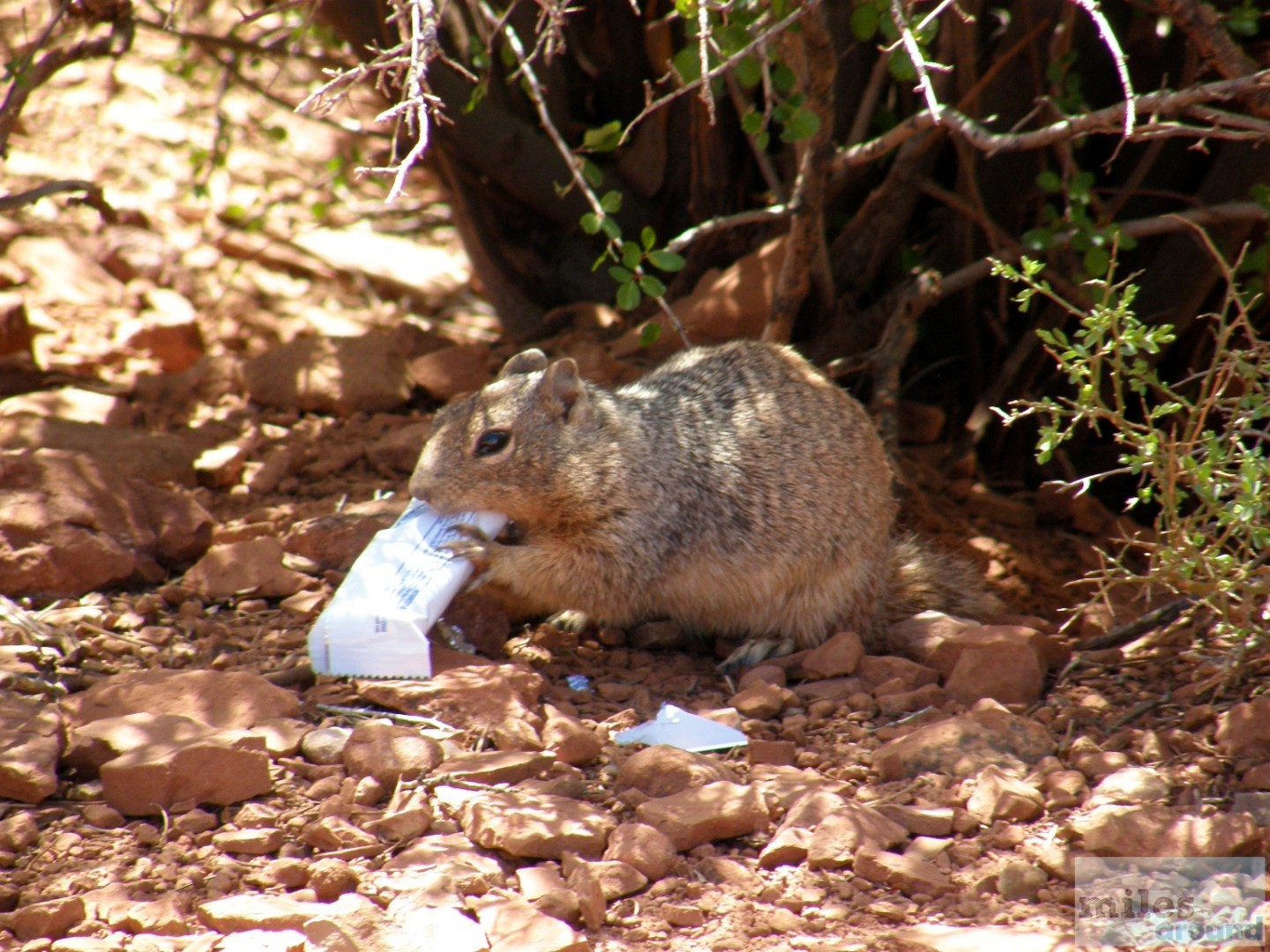
After that, we continued another 150 meters to Cedar Ridge. This is a small plateau where we could rest in the shade and interact a bit with the local wildlife. The squirrels living there can no longer be called wild. Constant feeding has made them so accustomed to humans that they even approach you to beg for food. It looks nice, but it has nothing to do with wild, untouched nature anymore. One of these creatures promptly seized the opportunity and stole Chris's granola bar.
Kaibab Trail: Skeleton Point
With that, half of our planned itinerary was complete, and we headed deeper into the canyon towards Skeleton Point. Along the way, we encountered several groups of mules. These pack animals are used by the locals to transport goods and tourists from the canyon rim to the Phantom Range, located on the Colorado River. It marks the end of the South Kaibab Trail and can be reached in a day, but only one way. The return journey, after an overnight stay at the range, was to begin the following day. Here, we truly realized that we were in the "Wild West," in cowboy and Native American territory. The mule handlers wore Western clothing and had the typical mumbling voice of cowboys – quite amusing.
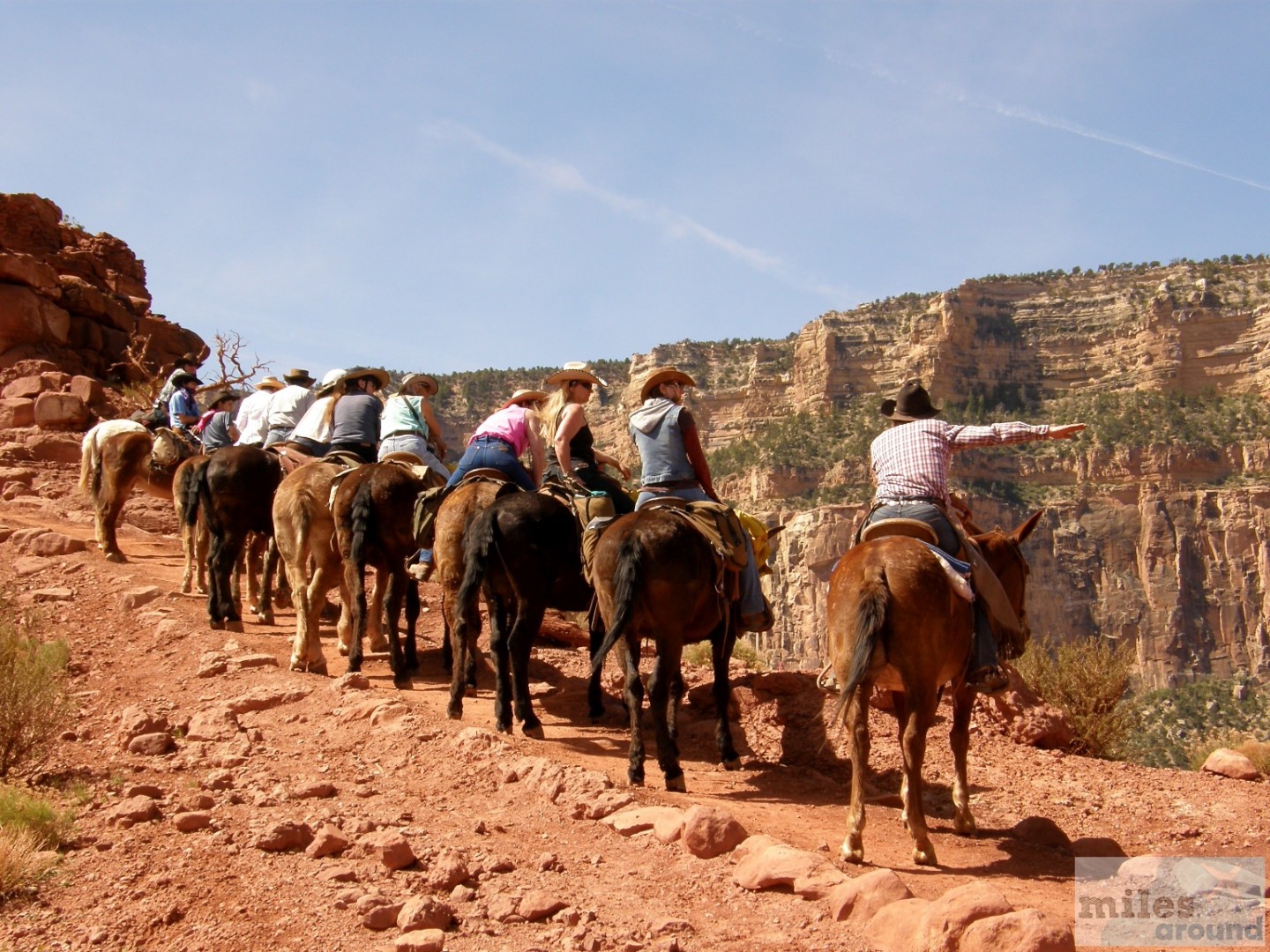
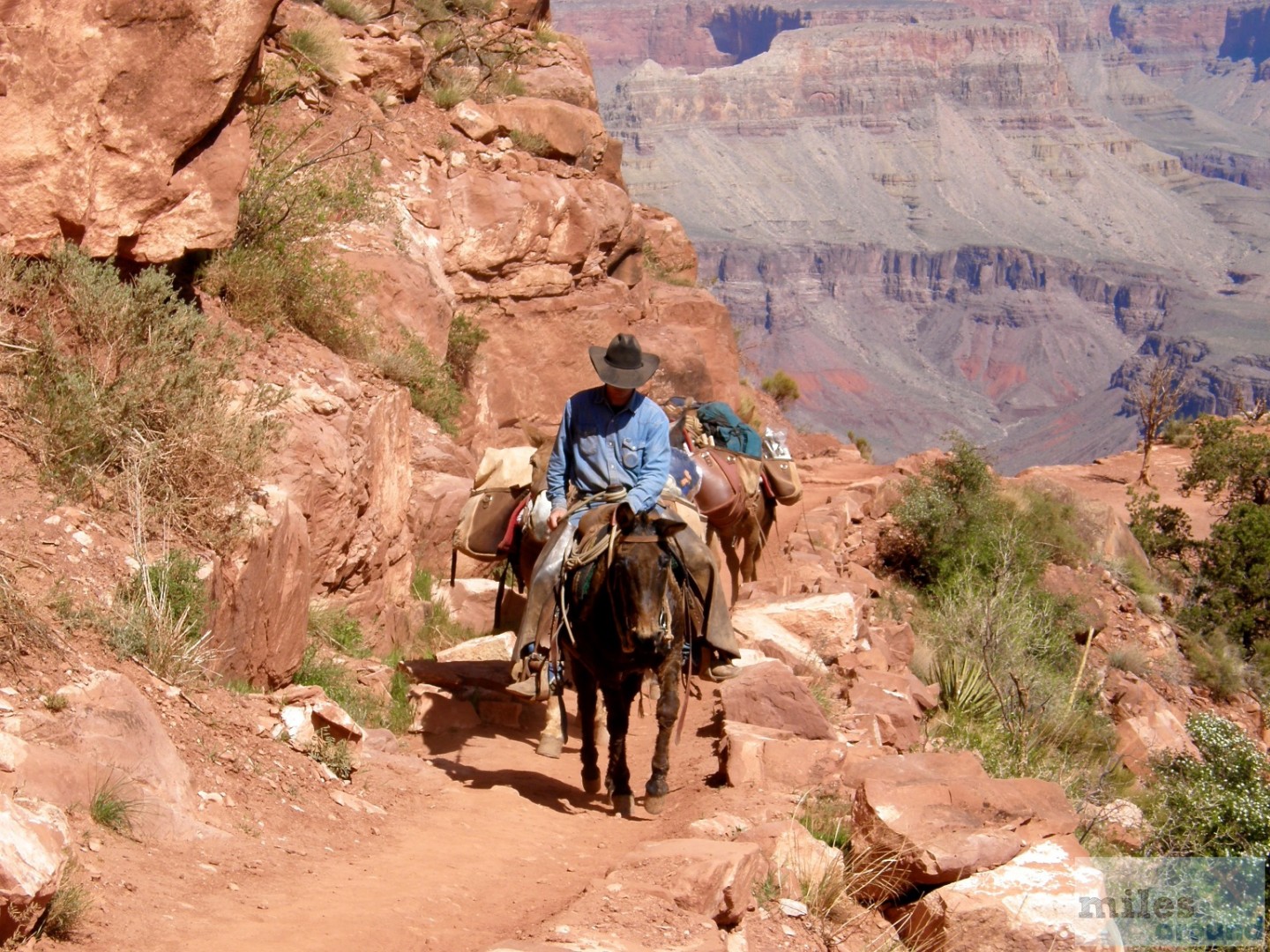
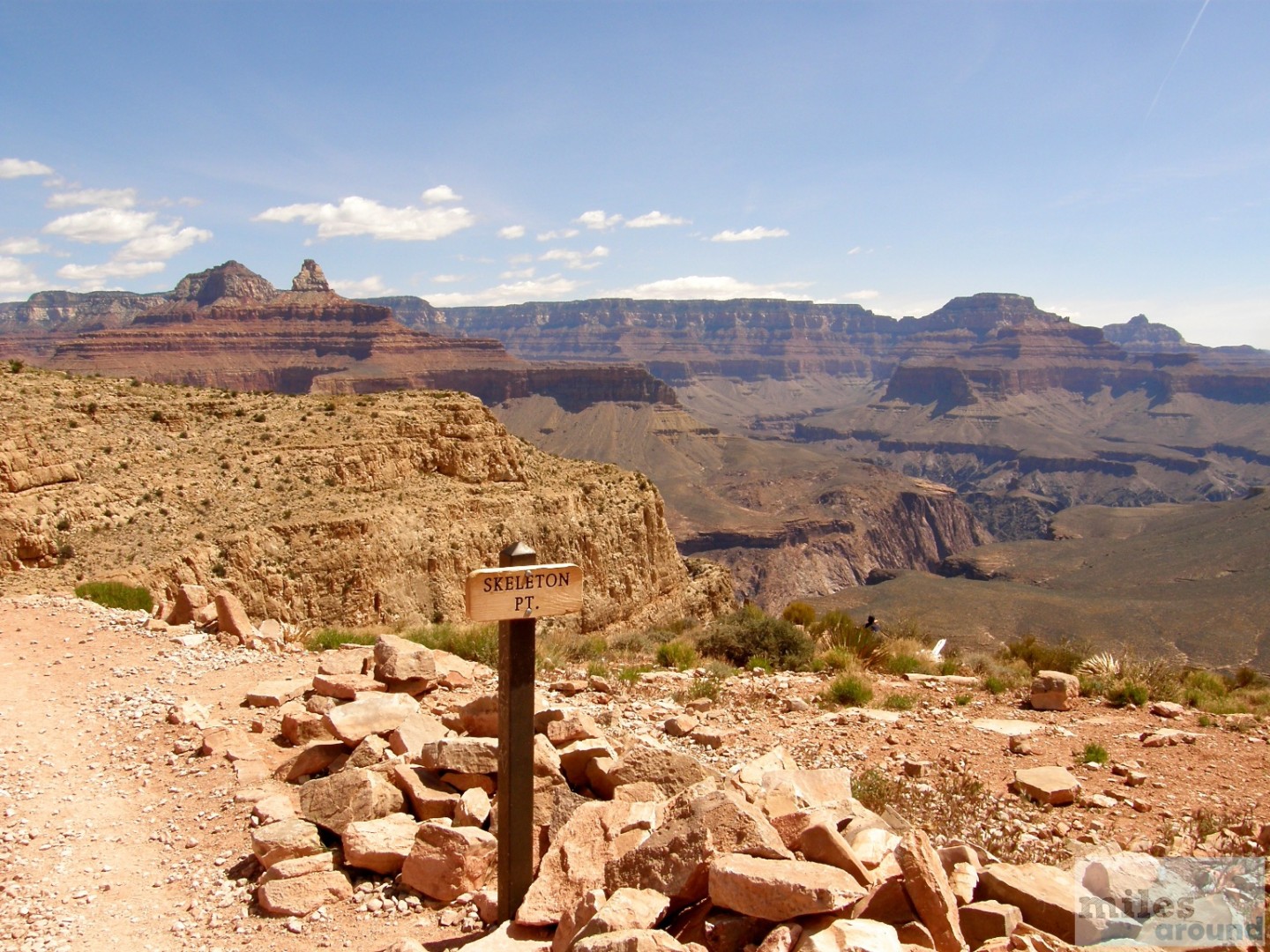
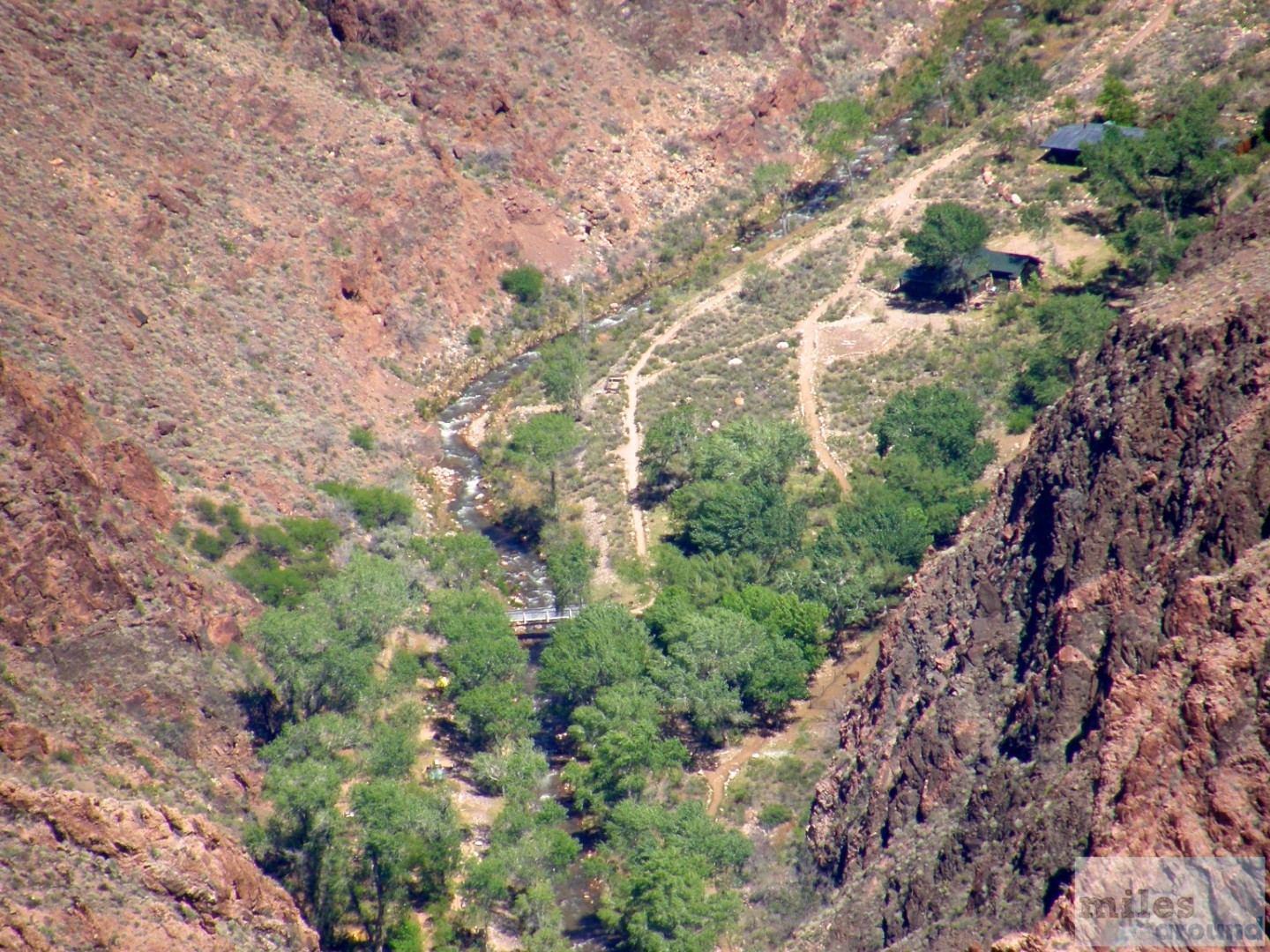
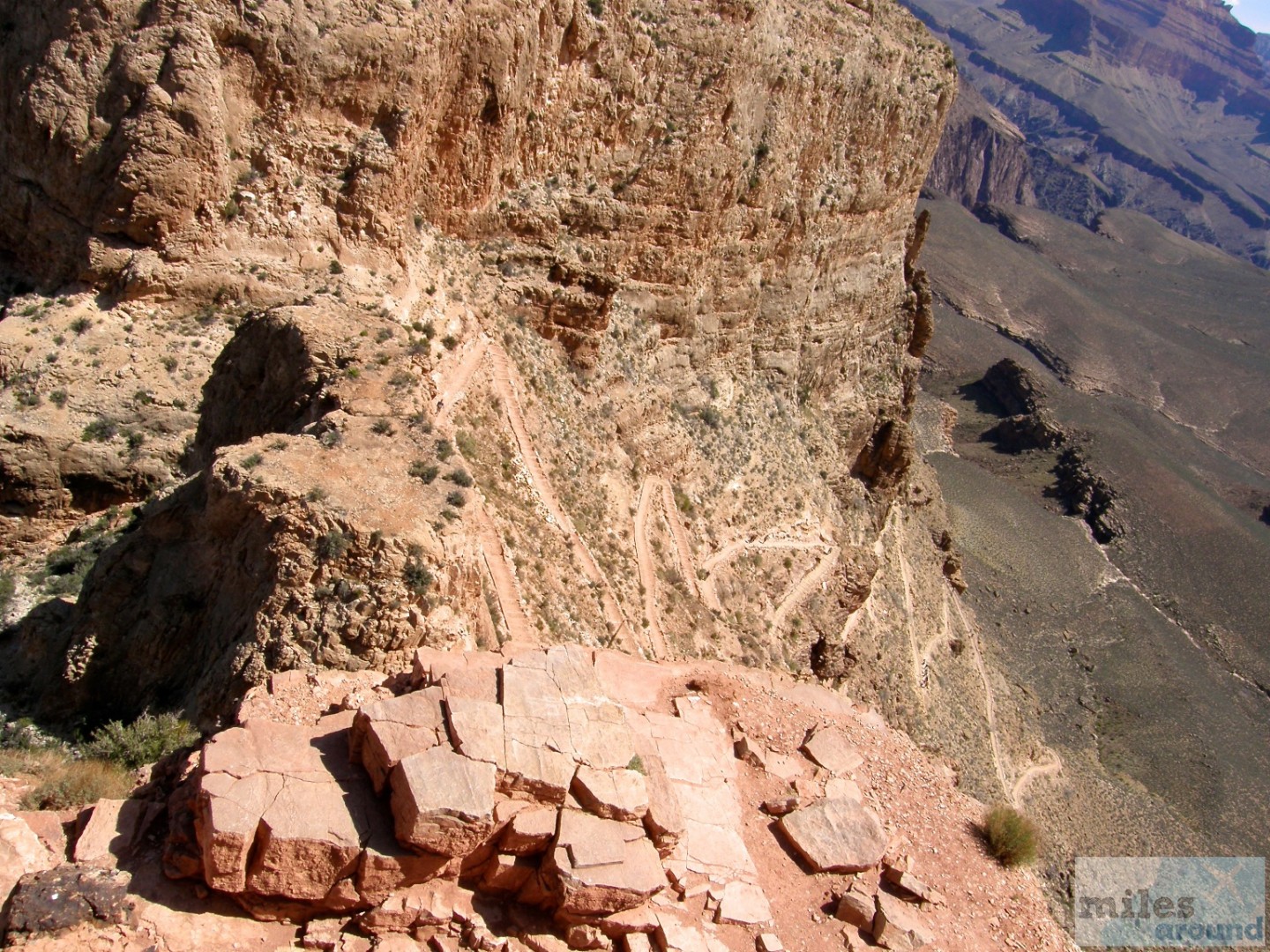
Finally arriving at Skeleton Point, we caught a glimpse of the Colorado River. Unfortunately, that was the only view we got, as the river only reappears after the complete descent to Phantom Range. The river is green at this time of year. A very refreshing breeze was blowing at this point, which was a real blessing in the nearly 30°C heat. We had already descended 650 meters (almost entirely downhill) by this point. However, it was only just after 11:00 AM. The park rangers recommended the route to this point as the longest for a day hike. This is certainly due to the subsequent very steep descent to the green plateau, where you drop another 200 meters in just half a mile. After much discussion and some persuasion on my part, we decided to tackle the descent after all.
Kaibab Trail: Our turning point
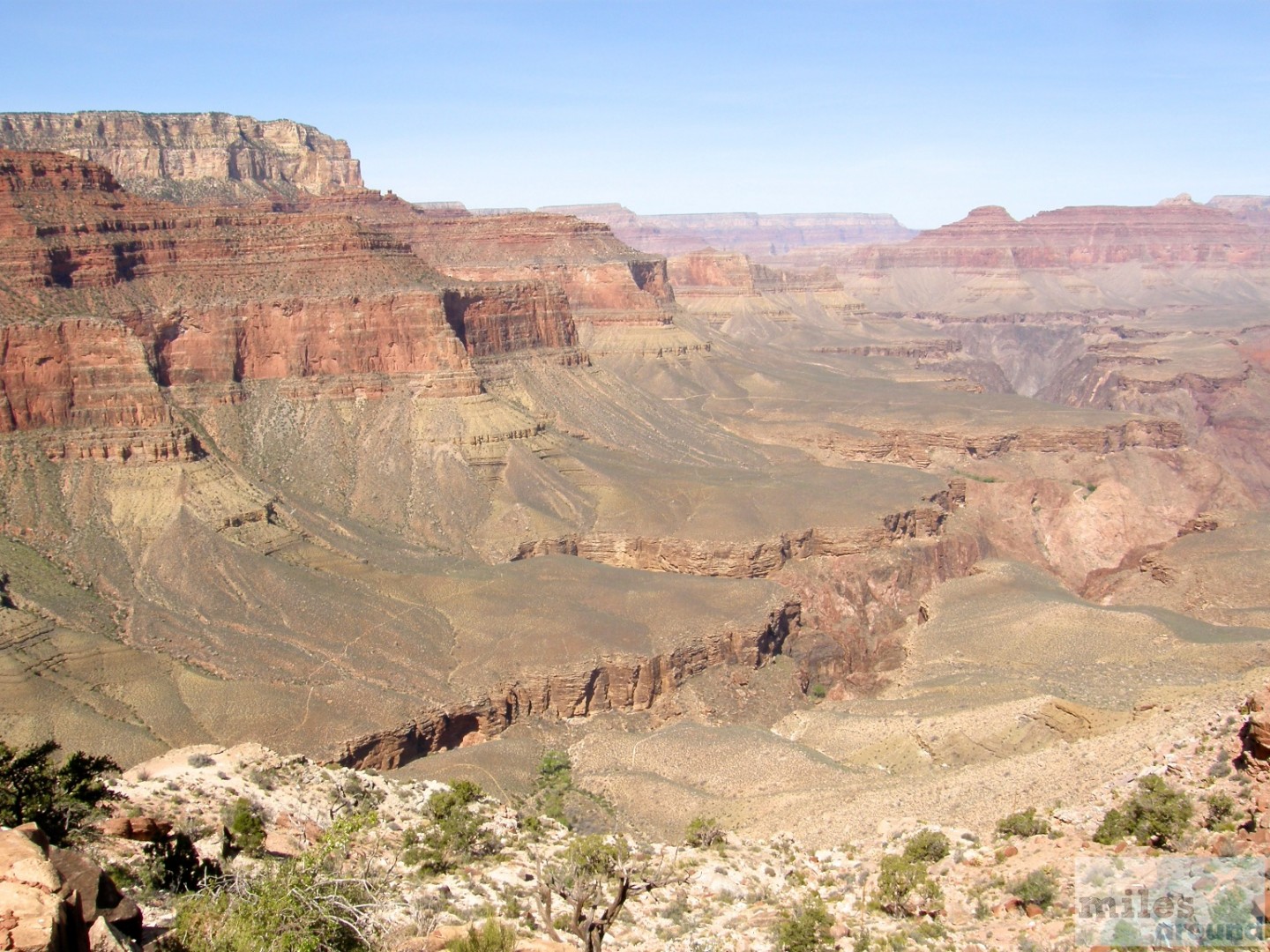
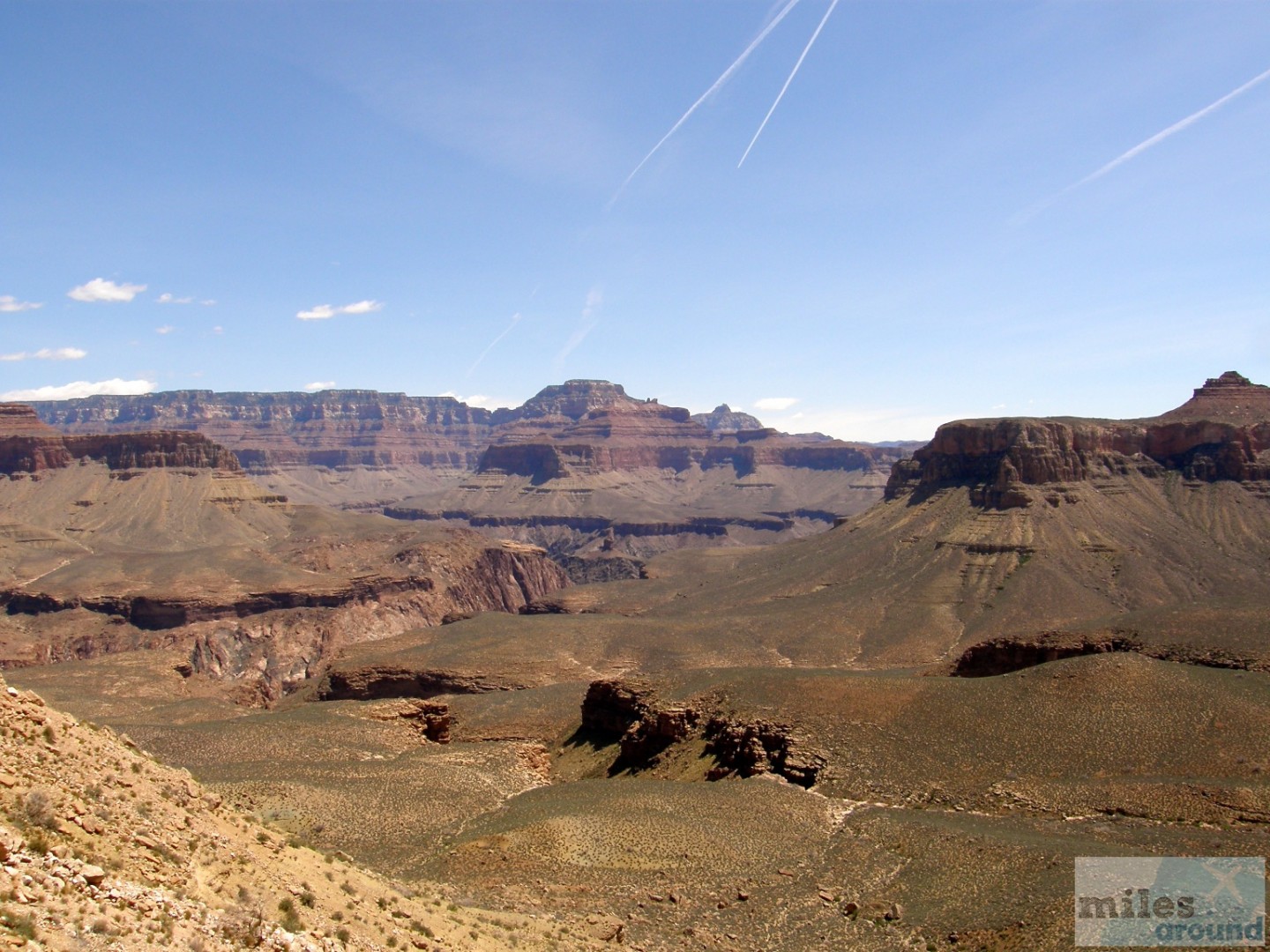
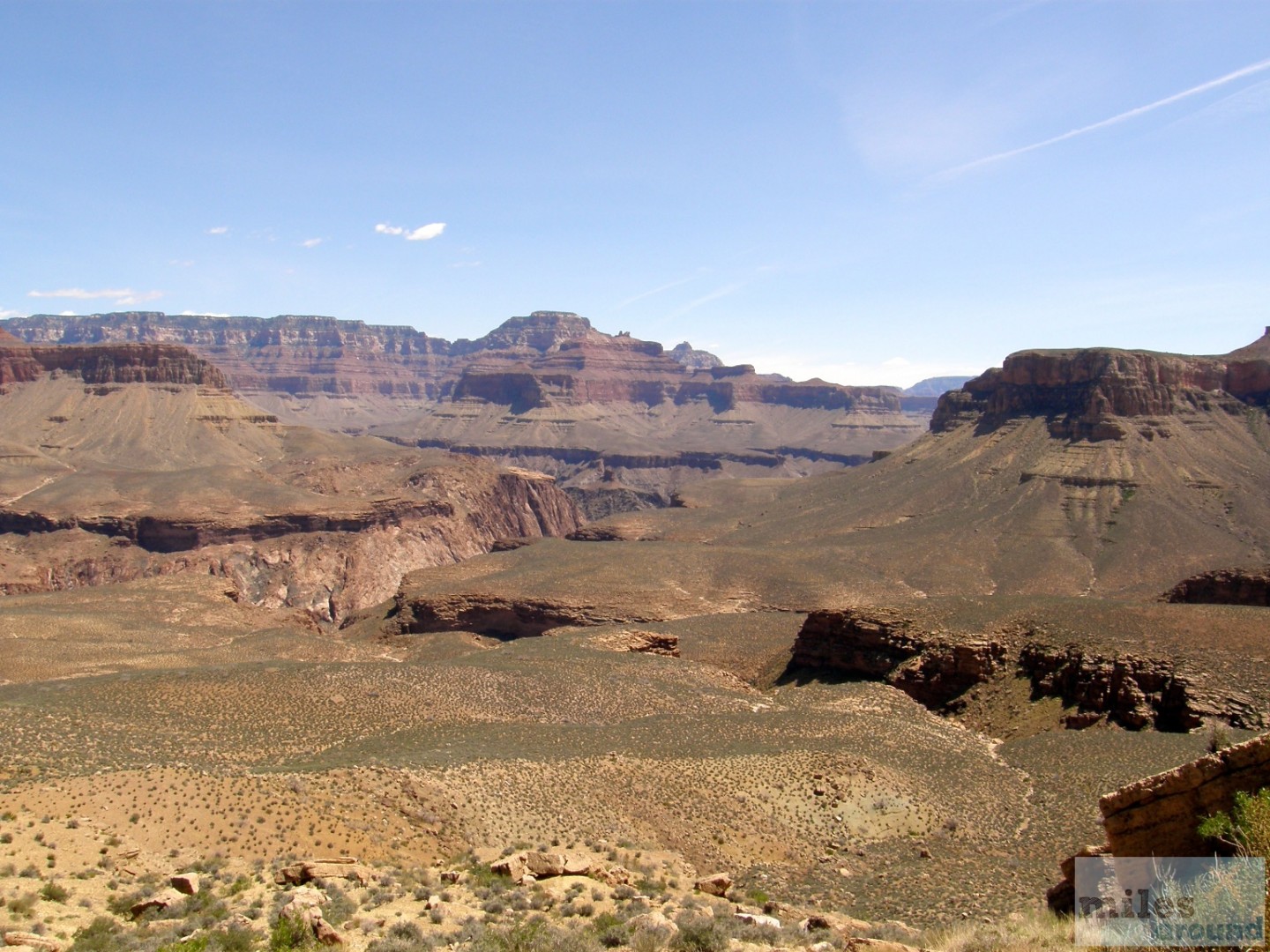
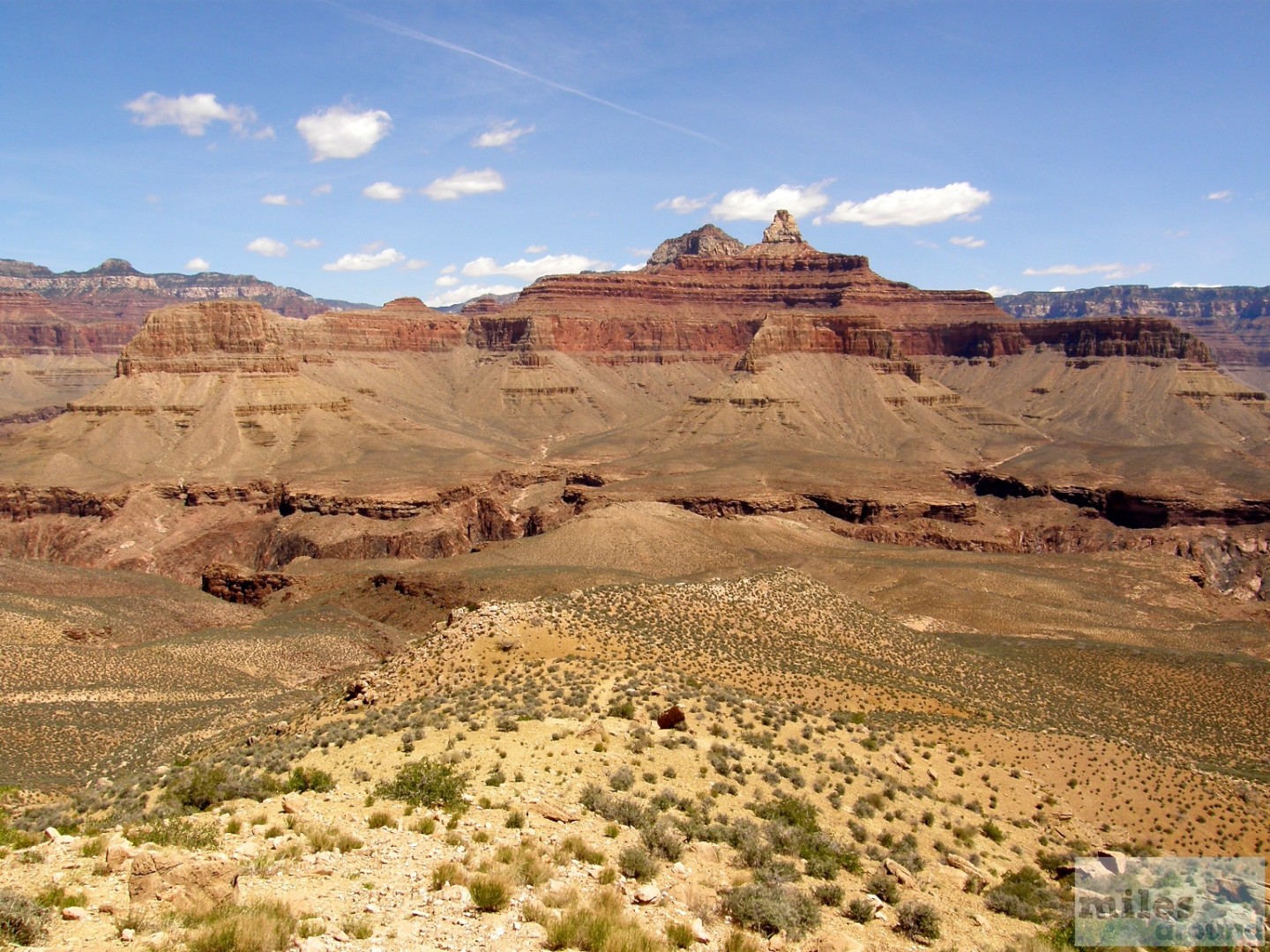
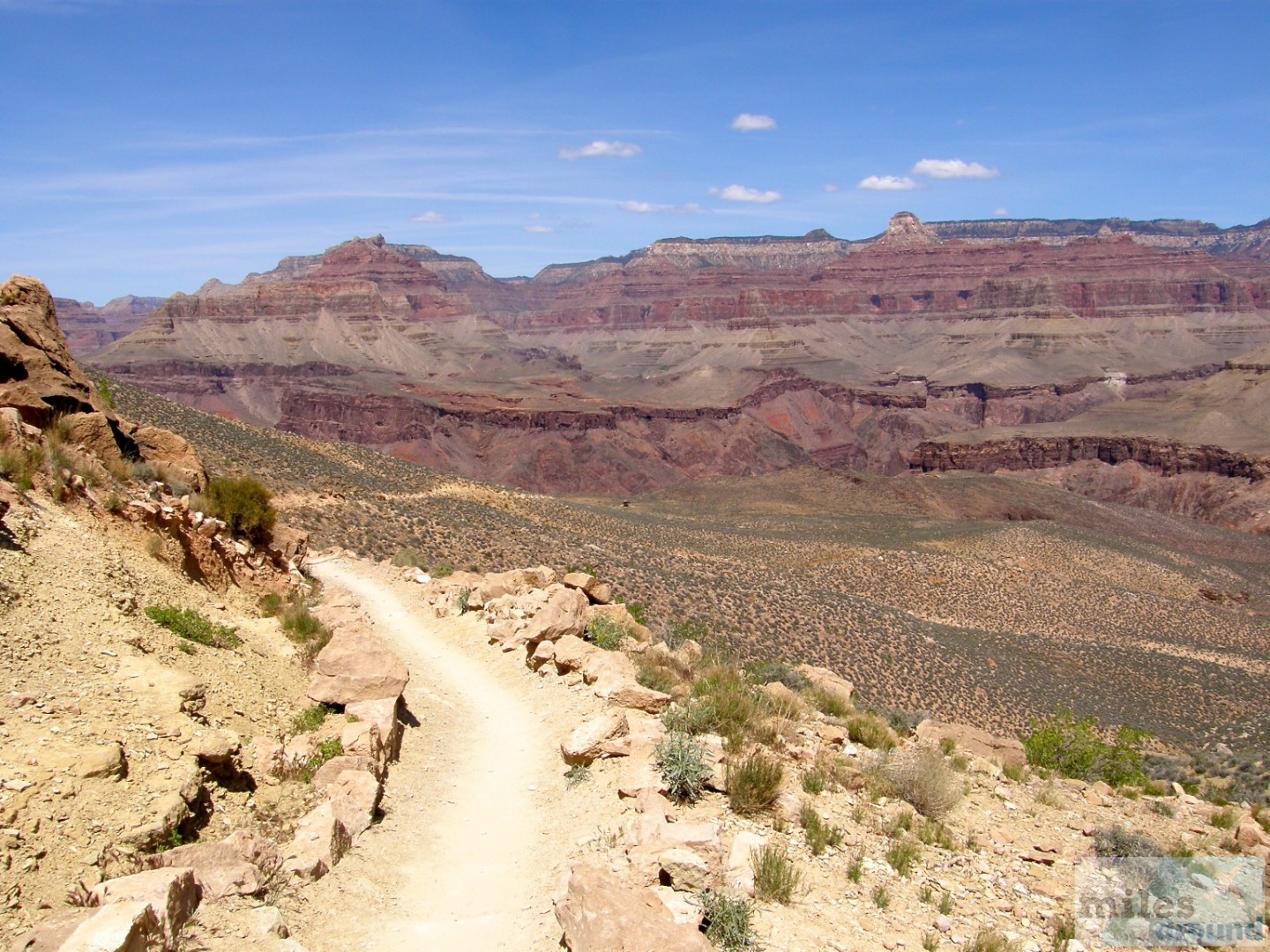
This section proved to be one of the most challenging parts of our hike, both on the descent and later on the ascent. The sun beat down just as relentlessly as before, but here we were sheltered from the wind, which created a still air and an extremely oppressive heat. After about 45 minutes, we reached the lowest point of our hike, approximately 850 meters below the canyon rim. From here, we had a good view of the inner canyon, at the base of which the Colorado River flows. We truly felt as if we were standing in the middle of a vast gorge, surrounded on all sides by sheer cliffs.
Kaibab Trail: Return route
Now it was time to head back. This turned out to be more difficult than expected. In the end, we ran out of water, all the cookies were gone, and we were quite exhausted. The entire hike took six hours, with the descent taking 2.5 hours and the ascent 3.5 hours. We covered a total of 1700 meters of elevation gain and approximately 11 kilometers.
Are you still looking for a suitable hotel near the Grand Canyon?
You can find a hotel to suit your budget via various online travel agencies such as Agoda, Booking.com, ebookers.com, Expedia, Hotels.com, lastminute.com, otel.com or Venere.com.